Generates realistic 3D human motion in real time from text prompts plus optional controls like paths, waypoints and key poses, with infinite streaming. Can also drive a Unitree G1 humanoid in simulation; code and ~765MB models are released.
NVIDIA autoregressive diffusion model for real-time, text- and constraint-controlled 3D human motion generation.
Updated EU status checked Last shown
Ardy at a glance
- What is Ardy?
- Ardy is a model from NVIDIA. NVIDIA autoregressive diffusion model for real-time, text- and constraint-controlled 3D human motion generation.
- Who makes Ardy?
- Ardy is made by NVIDIA.
- Does Ardy work in the EU?
- Available in the EU. Released as downloadable code and models per a creator report, so usable anywhere including the EU; no explicit EU restriction found on the project page, but license terms were not verified. Last verified 14 Nov 2026.
- How much does Ardy cost?
- Open source. Code and models reportedly released for free (per a creator report); license terms not confirmed.
- Where was Ardy shown?
- In 1 creator video by AI Search. Most recently by AI Search on 19 Jul 2026, at 0:58 in “Kimi K3, dancing waifus, robot UFC, song to MIDI, GPT Red, hoverboards: AI NEWS”.
Sources: the vendor's own pages (linked above) and creator videos at the linked timestamps. EU status is information, not legal advice; see how we check.
ARDY (Autoregressive Diffusion with Hybrid Representation for Interactive Human Motion Generation) is a research model from NVIDIA, published in ACM Transactions on Graphics at SIGGRAPH 2026. It generates 3D human motion in a streaming fashion, conditioned on online text prompts and flexible kinematic constraints, with real-time responsiveness.
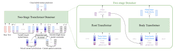
The model uses a hybrid representation that combines explicit root motion with a latent body embedding, and a two-stage autoregressive transformer denoiser that predicts root motion first and then body tokens. It supports variable history context. Supported constraints include root paths and waypoints, full-body keyframes, and sparse joint positions or rotations. These can be placed beyond the current generation window to reach long-horizon goals. It is positioned as a faster, interactive counterpart to the offline Kimodo model.
Demonstrated applications include real-time locomotion control for game characters, via mouse waypoints and keyboard velocity commands. Combined with the SONIC physical tracking policy, it drives a Unitree G1 humanoid robot. Per a creator report, code and roughly 765MB of models have been released, but the provided pages do not list repository or license details. It is aimed at animation, simulation and humanoid robotics researchers and developers.

- Streaming text-to-motion with online prompt changes
- Kinematic constraints: root paths, waypoints, full-body keyframes, joint positions/rotations
- Long-horizon goals beyond the current generation window
- Real-time locomotion control via mouse and keyboard
- Drives Unitree G1 humanoid via SONIC tracking policy
As seen on YouTube
Watch the moment: the exact second top creators show it. Videos load only when you press play, via youtube-nocookie.com.
Similar AI tools
Closest neighbours by meaning, not just by category.
Arty
Model · Nvidia
Nvidia platform for generating character animations from text prompts, used as a source of reference motion.
MotionBricks
Model · NVIDIA
NVIDIA's real-time generative motion model for game characters and humanoid robots, with smart primitives for authoring.
VideoMDM
Research
Diffusion framework that learns text-to-3D human motion generation from 2D poses extracted from monocular videos.
Nemotron 3 Embed
Model · NVIDIA
NVIDIA family of multilingual text embedding models (8B and 1B) for retrieval, RAG and coding agents.
Alaya World
Model
Interactive autoregressive world model generating minute-long playable video with real-time camera control and prompt events.
Mobius
Model
Unified motion-language model for text-to-motion, motion captioning, completion and editing, from HKUST and Tencent Games.